Line Art Bouquet Flower
A Quiet, Confident Kind of Floral
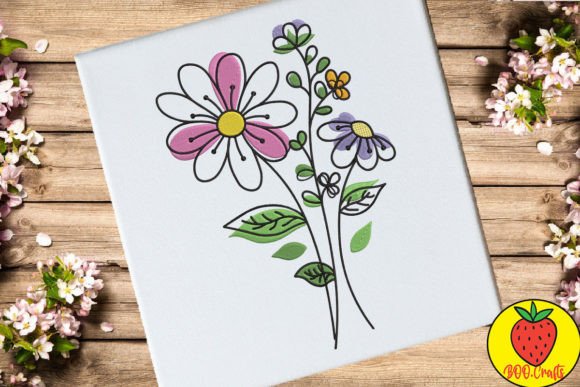
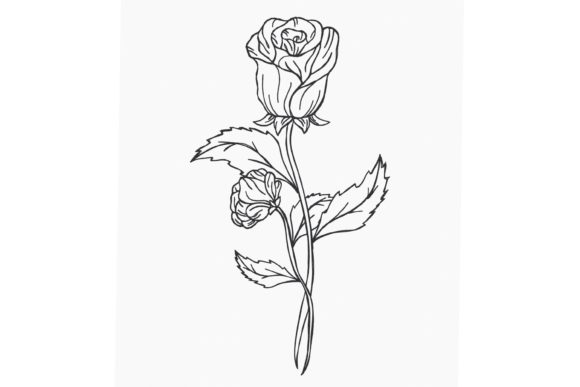
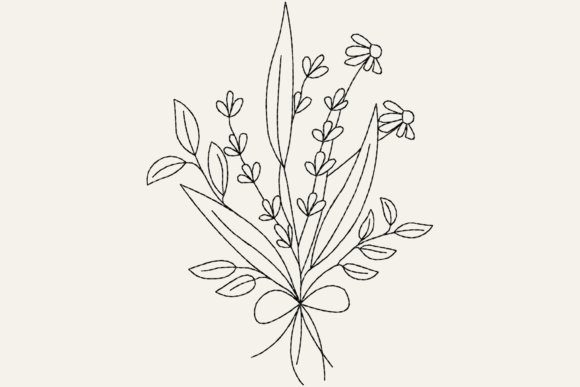
First glance at Line Art Bouquet Flower isn’t about boldness—it’s about breath. This isn’t a dense, saturated floral explosion. It’s a thoughtfully spaced arrangement of forest and garden blooms rendered in clean, continuous line work: delicate stems, open daisies, soft fern fronds, maybe a sprig of lavender or foxglove—just enough suggestion to feel intentional, not illustrative. The mood is calm, grounded, and quietly elegant. It doesn’t shout “floral”—it invites you to lean in. That makes it unusually versatile for real-world embroidery projects where subtlety reads as sophistication, not simplicity.
Where It Lives Best: Real Projects, Not Just Mockups
I recently tested Line Art Bouquet Flower on a natural linen tea towel for a local kitchen boutique—and it landed perfectly. The design flowed with the fabric’s texture instead of fighting it. No heavy fill stitches to stiffen the weave; just graceful outlines that softened at the edges after washing. I’ve also stitched it onto unbleached cotton tote bags for a small craft fair: customers consistently paused, traced the lines with their fingers, and said things like *“It feels handmade, not printed.”* That tactile authenticity is rare in outline-only designs, and Line Art Bouquet Flower delivers it because the spacing between elements gives the eye room to rest—and the thread room to breathe.
For custom apparel? It shines on lightweight sweatshirts and relaxed-fit tees—especially when placed off-center on the chest or along a sleeve seam. On baby onesies, it reads gentle and gender-neutral, avoiding cutesy clichés while still feeling tender. As a pillow cover motif or nursery wall hanging, it holds up beautifully at 4–5 inches wide: clear, legible, and calming. And yes—it works on holiday gifts (think embroidered muslin gift bags) and wedding favors (linen napkins with a single stem tucked into the corner), precisely because it doesn’t compete with occasion-specific themes. It supports intention, rather than declaring it.
Where to Pause and Plan
This design asks for thoughtful placement—not limitations. Because it’s an outline flower design, fine details like petal tips or thin vine ends can vanish on heavily textured fabrics (like thick terry cloth or bouclé) or very stretchy knits unless stabilized properly. On dark fabric, contrast matters more than usual: a single strand of ecru or oatmeal thread may disappear entirely. Always test your chosen thread color on scrap fabric first—and don’t assume black-on-white will read the same as white-on-navy.
Curved surfaces—like caps or curved apron pockets—require extra attention. The line continuity can distort if hooping tension isn’t even, so use a medium-weight cutaway stabilizer underneath and baste firmly. Avoid placing the full bouquet across seams or darts; instead, anchor one side (a stem base or leaf cluster) near a stable seam allowance. And while Line Art Bouquet Flower avoids dense stitch areas by design, double-check corners and tight loops in your embroidery software—if any segment looks unnaturally pinched at 100% scale, reduce slightly before stitching.
What It Does for Your Work—and Your Customers
Using Line Art Bouquet Flower elevates perceived value without raising production complexity. A customer buying a hand-embroidered kitchen towel doesn’t need to know it’s a machine embroidery design—they feel the care in the spacing, the balance, the restraint. That builds trust. For Etsy sellers and small shop owners, this design translates directly into better photo appeal: it photographs cleanly on light and dark backgrounds, scales well in printable mockups, and stays legible in thumbnail views. It also supports brand consistency—whether you’re building a botanical-themed craft business or curating a minimalist home goods line, Line Art Bouquet Flower becomes a quiet signature, not a one-off decoration.
Most importantly, it invites personalization without clutter. Add a single monogrammed initial beneath the bouquet on a tote bag, or pair it with a short handwritten-style phrase (“gather joy,” “grow gently”) on a pillow cover—and the line art becomes part of a narrative, not just decoration. That’s where handmade product resonance lives: in space, rhythm, and restraint.
Practical Designer Notes Before You Stitch
- Always test first: Run Line Art Bouquet Flower on scrap fabric matching your final project’s weight, weave, and stretch.
- Stabilizer isn’t optional: Use medium-weight cutaway for knits or lightweight tear-away for stable wovens like linen or quilting cotton.
- Check thread contrast: View your chosen thread against both light and dark fabric swatches—not just on screen.
- Review stitch density visually: Zoom in on your embroidery software—look for gaps or overlaps in line continuity, especially where stems meet blossoms.
- Hoop size matters: Confirm the design fits comfortably within your hoop with at least ½ inch margin—tight hooping distorts line flow.
- Think beyond color: Try stitching it in tone-on-tone (e.g., oat thread on oat linen) for subtle texture, or high-contrast (navy on cream) for graphic impact.
- Licensing check: If selling finished products or digital embroidery files, verify commercial use rights before listing on Etsy or your small shop site.
- Mock it smart: Drop Line Art Bouquet Flower into black-and-white mockups to assess clarity and silhouette strength—this reveals what customers actually see first.
Not Just Another Floral—A Design That Listens
There’s a quiet confidence in Line Art Bouquet Flower—the kind that comes from knowing exactly what it is and what it isn’t. It won’t overwhelm a delicate baby blanket or compete with bold typography on a merch tee. It won’t gum up your hoop or drown your stabilizer. What it does do is hold space: for craftsmanship, for calm, for the slow satisfaction of a well-placed stitch. Whether you’re prepping for a holiday craft fair, building a cohesive line of embroidered kitchen goods, or designing a personalized gift that feels meaningfully made—Line Art Bouquet Flower is the kind of embroidery file that earns repeat use, not just one-time application. It’s not flashy. It’s faithful.